Search for a minibus air conditioner and you will find two camps, each insisting its architecture is the only correct one. The truth: they solve different problems, and the right choice depends on how your vehicle actually spends its day. This guide lays out the trade-offs the way a manufacturer with more than 20 years in vehicle HVAC would explain them across the counter.
Before comparing any units, write down four numbers: cabin length, glazing area, typical passenger load, and the hottest ambient temperature where the vehicle operates. A 6–7.2 m minibus with tour-bus glazing carries a heat load that a same-length panel conversion does not. Under-sizing is the most common and most expensive mistake in this category, because the symptom — rear passengers sweating while the driver freezes — looks like a defective unit rather than a wrong specification.
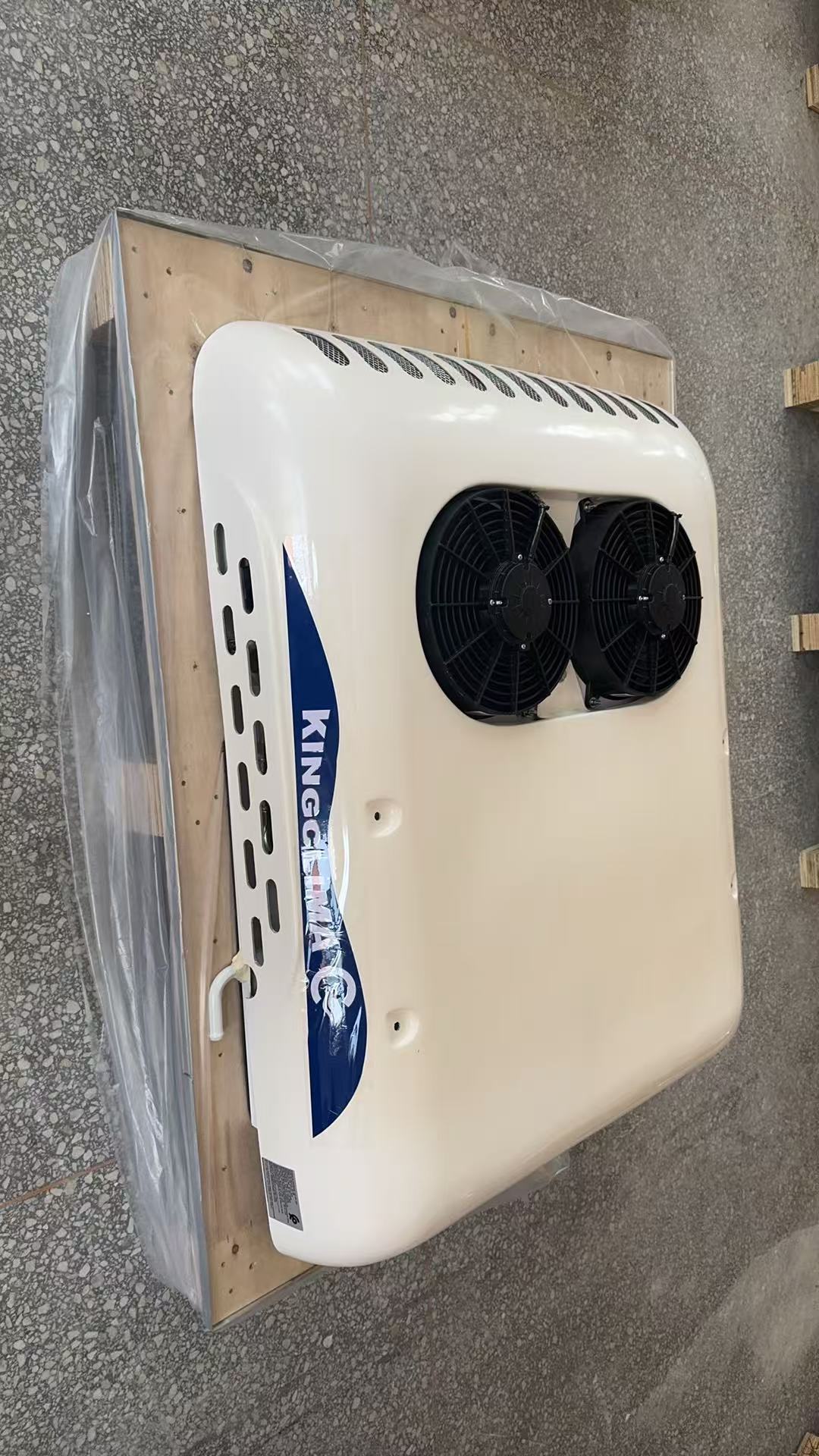
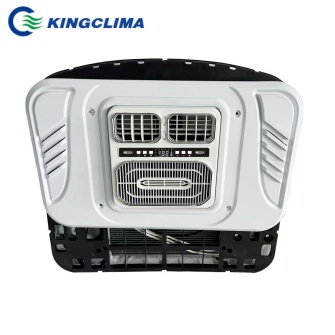
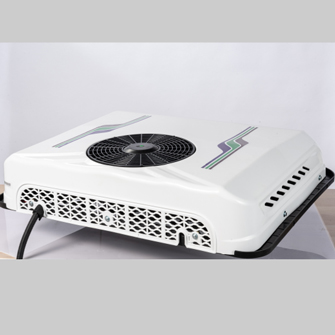
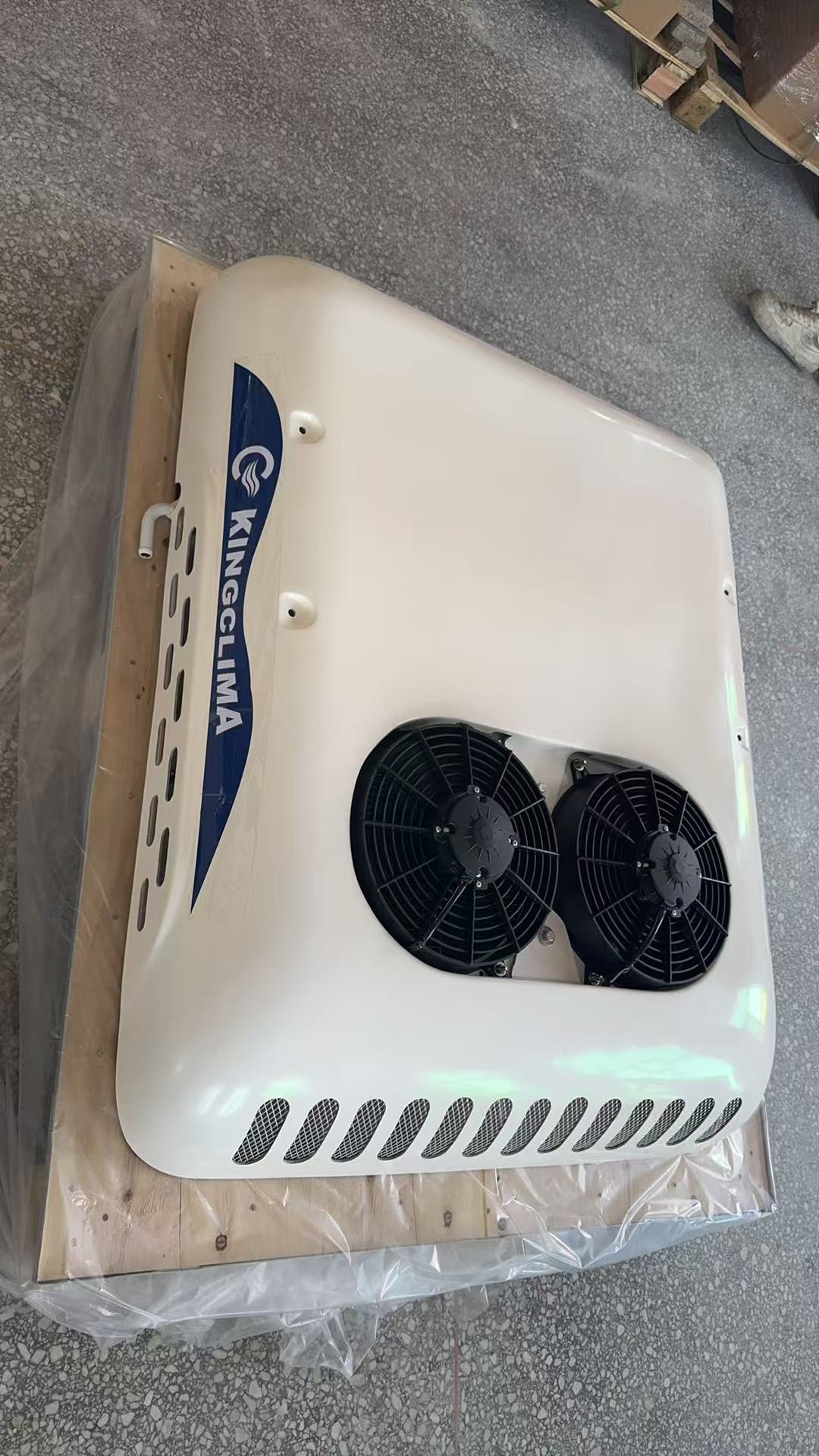
An engine-driven rooftop unit takes its compressor power from the vehicle's own engine. The payoff is capacity: a direct driven system such as the KK-100 minibus van air conditioner delivers a full 10 kW to a 6–7.2 m cabin, with 2,000 m³/h of evaporator airflow keeping the rear bench as cool as the front row. There is no battery bank to size and no inverter losses to manage — the blowers simply run on the vehicle's standard 12V/24V electrics. For shuttles, school buses, staff transport and ambulances, where the engine runs whenever passengers are aboard, this is the efficient answer.
A battery-driven unit runs its own compressor from a dedicated battery bank. That independence is exactly what drivers need during rest breaks, loading stops and overnight parking — scenarios where idling a passenger vehicle to cool an empty cabin wastes fuel and, in some loading zones, is restricted. The trade-off is energy discipline: bank capacity and charging habits determine whether the unit survives its second summer, so follow proper lead-acid charging and depth-of-discharge practice when sizing it.
Ignore marketing wattage and read three figures off any datasheet:
Cabin heat is not a comfort issue only. Vehicles waiting with passengers aboard reach dangerous interior temperatures quickly — one reason OSHA's heat safety guidance applies to drivers and loading crews. Reliable air conditioning is part of the duty-of-care case, not an optional upgrade.
Cooling hardware fails at the edges: a drain that clogs, a bracket that cracks, a controller that nobody can diagnose. KingClima has built vehicle air conditioning and transport refrigeration equipment since 2003 — over 20 years — with an annual output of around 70,000 units, and backs the KK-100 with two years of after-sales service, free spare parts replacement in that period, and 7×24 online support. Twenty years of failure data is what lets a manufacturer tell you what a unit will not do.
Send us your cabin length, passenger count and operating region, and we will tell you honestly which architecture fits — even when the answer is "neither, talk to us first."