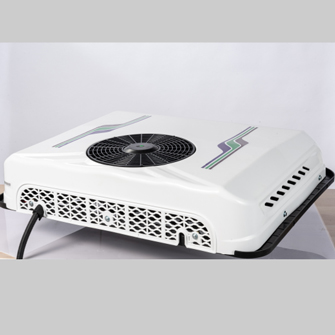
A tent has no ductwork, no mains socket and nowhere to hide a compressor — which is exactly why the battery powered portable air conditioner category exists. Yet the first question serious buyers ask is rarely about cooling capacity. It is about hours.
Cooling capacity decides whether a unit can hold a space at temperature. Runtime decides whether you are still asleep at 3 a.m. The KingClima KC700 answers the first with 700 W (2,390 BTU). The second is something you build yourself, and the arithmetic is simpler than most people expect.
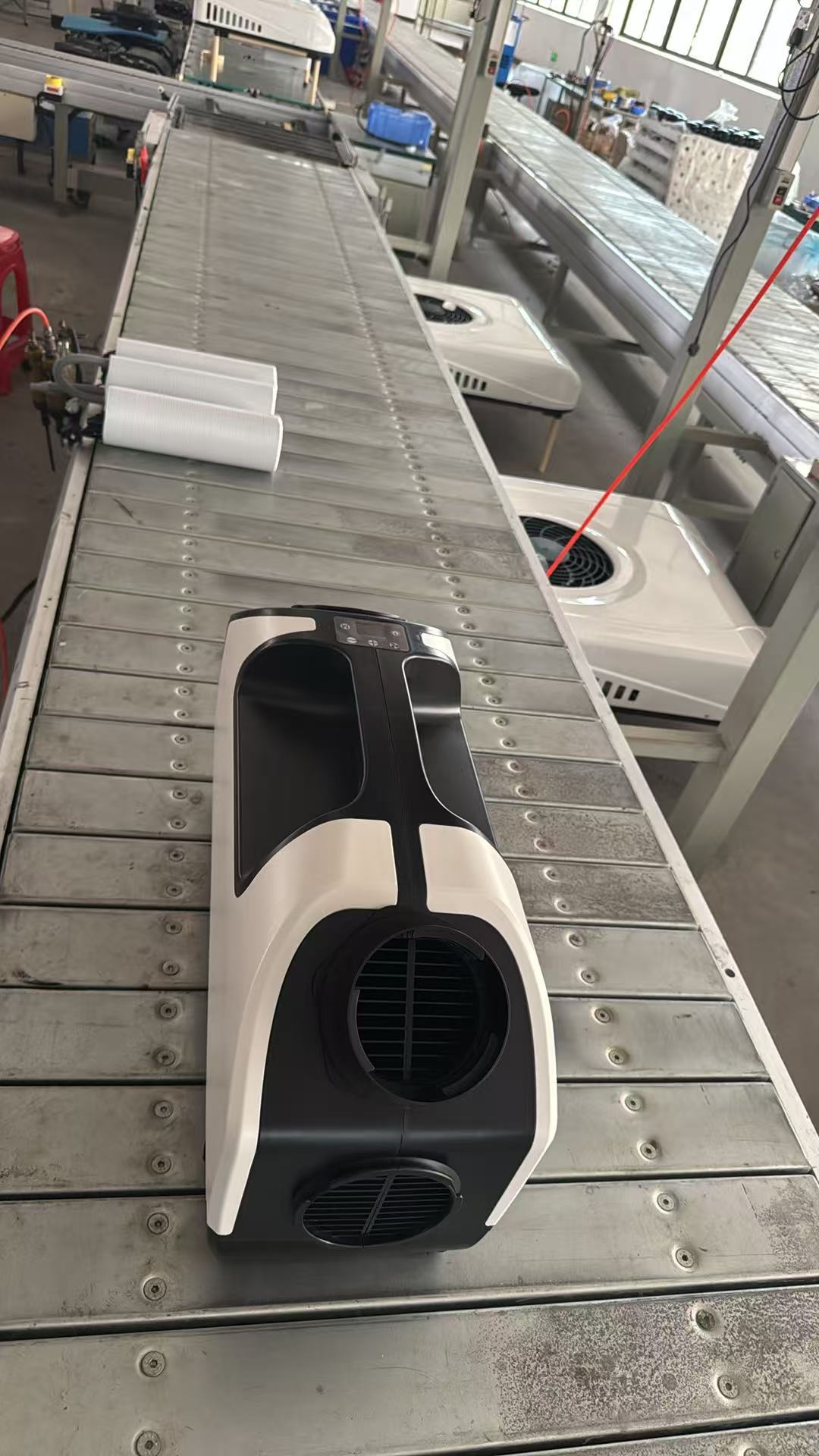
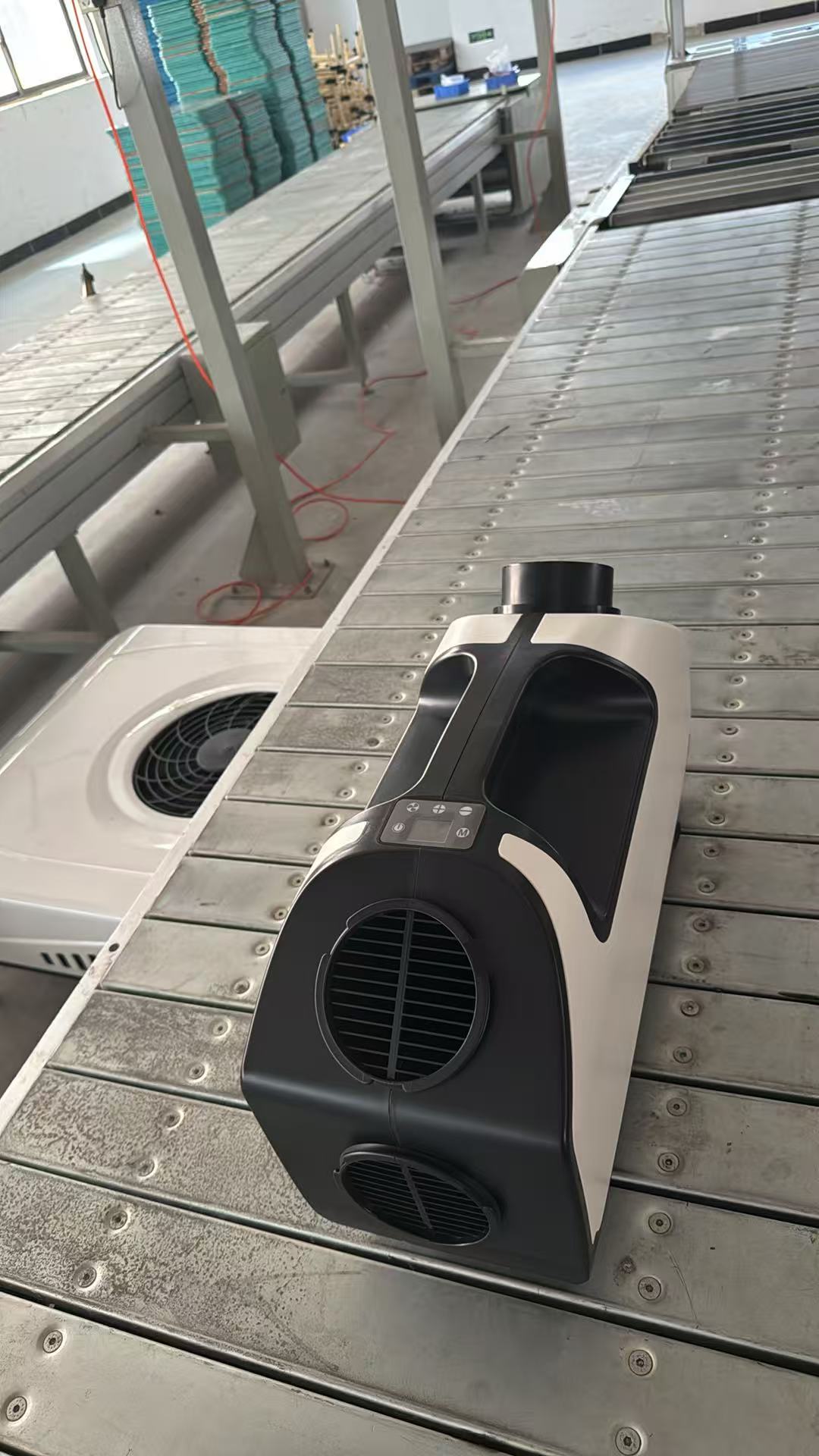
Rated power input on the KC700 is 250 W, drawing 10 A at DC24V. Every runtime estimate starts here.
Take a 100 Ah, 24 V lithium bank. It stores roughly 2.4 kWh. Divide by 250 W and you get just under ten hours on paper. Respect a sensible depth of discharge — running lithium flat shortens its life — and seven hours of genuine cooling is a fair expectation. Lead-acid behaves differently again: usable capacity is far lower and voltage sags as it empties, so battery chemistry matters as much as amp-hours.
The KC700 runs on either DC24V or AC 100–240V. The distinction is not cosmetic.
DC is for the vehicle or the house bank. It bypasses the inverter, avoids conversion losses and suits a 24V system you already carry. AC is for a campsite pedestal, a generator or a wall socket. Overlanders with a 24V bank will find DC the efficient path; weekend campers on a powered pitch will find AC simpler by far.
Solar recharge is where expectations drift furthest from reality. A 250 W load needs roughly 250 W of sustained panel output to run indefinitely, and a tilted, partly shaded panel rarely delivers nameplate. Plan to recharge rather than to run live, and size the array for your daily cooling hours instead of for peak draw.
.jpg)
Compressor quality is the least visible spec and the most consequential. The KC700 uses a Panasonic rotary compressor — the same family found in domestic units that run for a decade. In a portable format that counts twice: efficiency decides how far 250 W stretches, and reliability decides whether the unit survives being lifted, strapped and shaken between trips.
The unit weighs 10.5 kg net and 12 kg gross, in a 585 × 230 × 337 mm case. Light enough for one person to move, small enough to sit inside a tent or under a truck bed canopy.
Sound pressure stays below 55 dB — conversational level, quiet through a tent wall. The unit carries climatic class T/ST/N/SN and an operating range of 16 °C to 30 °C, so it holds a sleepable temperature rather than chasing extreme setpoints. R134a refrigerant keeps the system simple and serviceable worldwide. Carton dimensions of 635 × 318 × 476 mm allow 290 / 606 / 693 units per 20 ft, 40 ft and 40HQ container — useful if you are buying for a rental fleet or a retail range.
KingClima has spent more than 20 years engineering vehicle HVAC and cold chain transport equipment — truck air conditioners, trailer refrigeration units, bus HVAC and the spare parts that keep fleets running. That background shows up in small decisions: a compressor chosen for duty cycle rather than headline price, control logic that respects battery voltage, and one engineering team responsible for both a rooftop truck unit and a tent unit.


.png)

.jpg)
.png)